
Protecting Oceanfront Displays from Severe Saltwater Corrosion
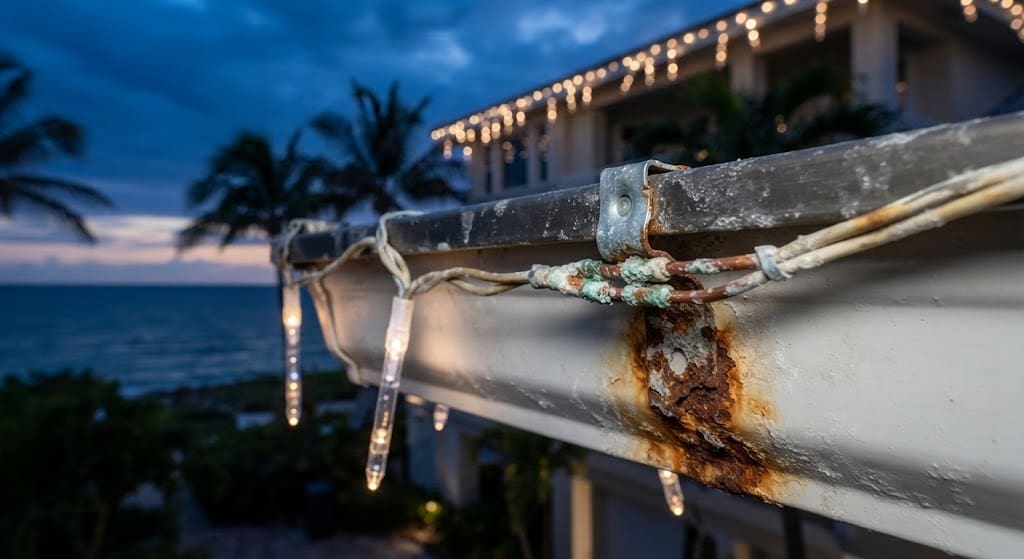
If you live along the coast, you already know saltwater air doesn’t just affect your car and patio furniture; it goes after anything metal, including your holiday lighting. Clips rust, connectors corrode, and strands that would have lasted five seasons inland can start failing after just one winter near the ocean. It’s one of the most common reasons oceanfront homeowners end up replacing their entire display far sooner than expected. Learn how to Protect Oceanfront saltwater corrosion Christmas lights and prevent corrosion to keep displays running beautiful all season.
Since 2012, Christmas Decor of Boynton Beach has installed and maintained holiday displays across South Florida’s coastline, and saltwater corrosion is one of the most predictable and most preventable issues we see. Here’s what’s actually happening to your lighting, and how to protect a display that has to survive true oceanfront exposure.
Why Saltwater Air Is So Damaging to Holiday Lighting
Standard holiday lighting components are typically built to handle general outdoor exposure, rain, humidity, and sun, but not the specific combination of salt and moisture found within a mile or two of the coastline. Saltwater in the air is highly conductive and corrosive, and Saltwater Corrosion Christmas Lights for Oceanfront Properties behaves differently than plain rainwater in a few important ways:
- Salt accelerates oxidation. Metal clips, connector pins, and exposed contacts corrode far faster in salt air than in fresh air at the same humidity level, because salt ions speed up the chemical reaction that causes rust.
- Salt residue doesn’t wash away completely. Even after rain, a thin film of salt often remains on surfaces, meaning the corrosive exposure is essentially constant near the coast rather than occurring only during storms.
- It reaches further than people expect. Ocean breezes carry salt air well beyond the immediate waterfront, meaning homes several blocks inland can still experience accelerated corrosion, especially during windier months.
Warning Signs Your Display Is Being Affected
- Visible rust or discoloration on metal light clips, gutter hooks, or mounting hardware
- Green or white corrosion buildup on connector pins, which increases electrical resistance and can cause flickering or dead sections
- Stiff or brittle clips that crack when flexed, rather than bending as they should
- Increased GFCI trips or flickering compared to previous seasons, often a sign that corrosion has compromised a connection point
- Pitting or a rough, textured surface on metal components that were previously smooth
How to Protect an Oceanfront Display
1. Choose Corrosion-Resistant Hardware From the Start
Not all light clips and mounting hardware are created equal. For oceanfront properties, stainless steel or coated hardware specifically rated for coastal or marine environments holds up dramatically longer than standard galvanized clips, which are often the first component to fail. If you’re unsure what’s currently installed on your home, our guide on preventing rust on light clips breaks down which materials actually hold up near the water.
2. Rinse Fixed Hardware Periodically
For hardware that stays mounted year-round permanent gutter clips, junction boxes, or fixed mounting points a periodic freshwater rinse helps remove accumulated salt residue before it has time to accelerate corrosion. This is especially important after several consecutive days without rain, since salt film can build up steadily during dry, breezy stretches.
3. Use Marine-Grade Sealant at Every Connection
Standard weatherproofing is often not enough for direct oceanfront exposure. Marine-grade dielectric grease or sealant at every plug and connector point creates a barrier against both moisture and salt penetration, significantly reducing the corrosion that typically starts inside connector housings where it’s hardest to spot.
4. Store Components Properly Between Seasons
Salt-exposed components that are boxed up wet, or stored without being rinsed and dried first, will often show more corrosion damage from off-season storage than from an entire season of active use. Rinsing hardware with fresh water and allowing it to fully dry before storage meaningfully extends its lifespan.
5. Plan for More Frequent Inspections
Oceanfront displays generally need more frequent mid-season checks than homes even a mile or two inland. Catching a corroding connection early before it fails outright or trips a circuit is far easier and less costly than replacing an entire strand or section mid-season.
Our holiday lighting maintenance service is built around exactly this kind of proactive inspection schedule, which matters even more for properties dealing with direct saltwater exposure.
Materials That Hold Up Best Near the Coast
| Component | Standard Option | Coastal-Rated Option |
| Light clips | Galvanized steel | Stainless steel or marine-grade coated |
| Connectors | Standard rubber-sealed | Marine-grade sealed with dielectric grease |
| Mounting hardware | Zinc-plated screws | Stainless steel or coated fasteners |
| Extension cords | Standard outdoor-rated | Heavy-duty outdoor-rated, stored indoors between uses |
When Corrosion Damage Requires Professional Attention
A few surface-level rust spots on clips are a normal part of coastal ownership and usually just mean it’s time to replace that hardware. But you should have a professional assess your display if you notice:
- Corrosion visible inside connector housings, not just on external hardware
- Repeated electrical trips that persist even after replacing visibly corroded clips
- Corrosion near any junction box or permanent electrical connection point
- Hardware that’s structurally compromised, cracking, crumbling, or no longer holding lights securely
Since electrical safety and structural integrity are both on the line with severe corrosion, this is an area where a professional inspection is worth the peace of mind, especially on a home with direct ocean exposure.
Get a Display Built to Handle Coastal Conditions
Oceanfront properties need a different level of planning than a standard inland installation, from the hardware selected to the maintenance schedule that follows it. Since 2012, our team has designed displays specifically built to withstand South Florida’s coastal conditions, using materials and techniques that go beyond standard holiday lighting setups.
As a trusted provider of Manalapan holiday light installation, we understand exactly what direct oceanfront exposure does to a display and how to plan around it from day one. Contact us today for a consultation, and let’s build a display that’s still looking sharp at the end of the season, not corroding away before the holidays are even over.