
Why Christmas Lights Burn Out Prematurely in Extreme Florida Summer Heat
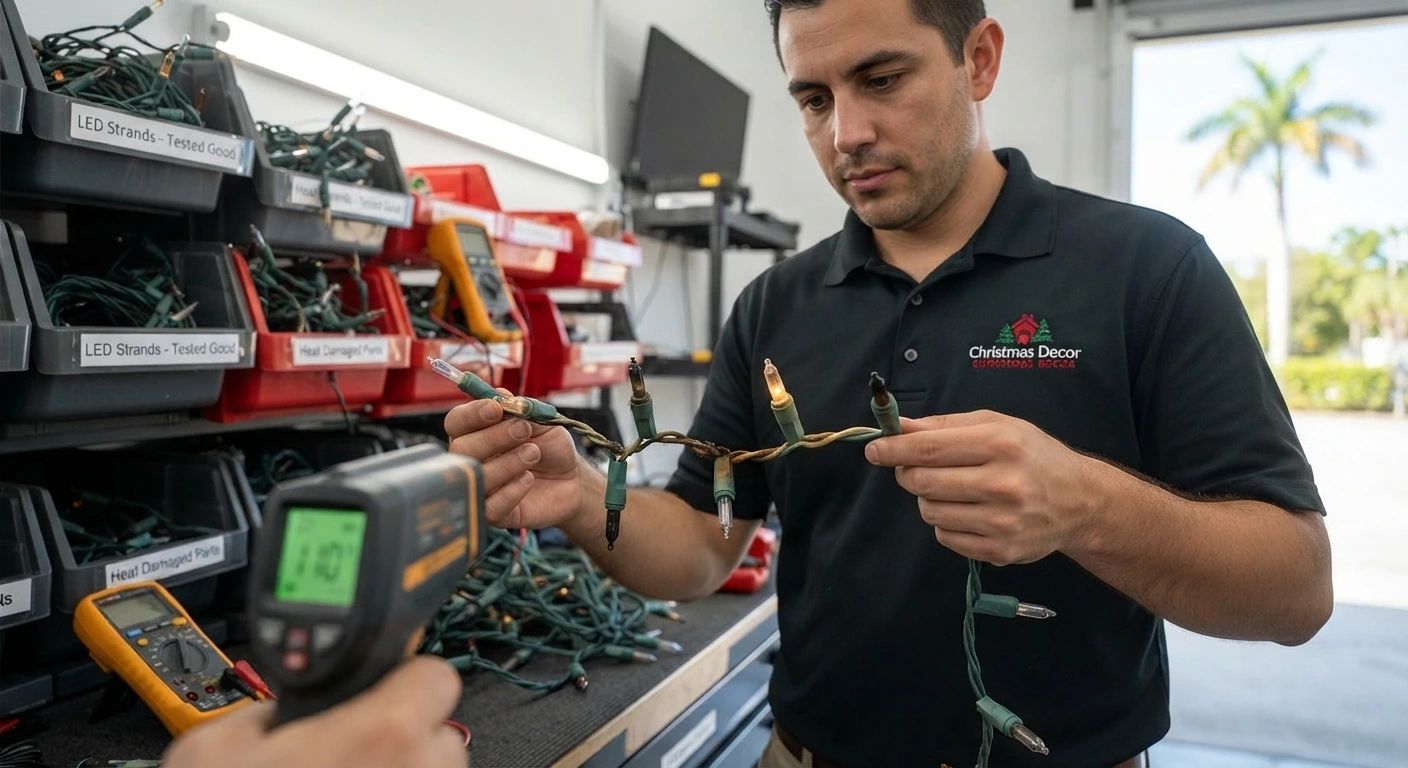
If you have pulled your holiday lights out of storage only to find half the strand dark, you’re not imagining things, and you’re not alone. Florida homeowners lose more strands to heat damage than homeowners in almost any other part of the country. Understanding why your holiday lights burn out before the season even starts is the first step to protecting your investment and keeping your display glowing from the first night through New Year’s.
In this guide, we break down exactly what South Florida’s climate does to holiday lighting, which materials hold up best, and how professional installation protects your display long after the sun goes down.
Why Do Holiday Lights Burn Out So Quickly in Florida?
Most people assume bulbs simply wear out with age, but in Florida, heat is usually the real culprit. Attics and garages where lights sit in storage can reach 140 degrees or higher during our long summer months. That sustained heat breaks down plastic housings, dries out rubber seals, and stresses the internal wiring inside each bulb socket long before the lights are ever plugged in for the season.
When homeowners ask why their holiday lights burn out year after year, the answer often traces back to how and where the lights spent the previous eight month rather than anything that happened during installation.
What Does Extreme Heat Actually Do to Light Strands?
Heat damage shows up in a few predictable ways:
- Brittle wiring: Prolonged heat exposure dries out the insulation around copper wiring, causing it to crack or crumble when strands are unwound.
- Melted or warped housings: Cheap plastic bulb sockets can soften in extreme heat, loosening connections and causing flickering or dead sections.
- Corroded connectors: Heat combined with Florida’s humidity, accelerates corrosion at plug and socket connections.
- Degraded LED components: Even LED strands, which run cooler than incandescent bulbs, contain small circuit boards that can fail under repeated heat cycles..
A strand that looked perfect in January can be unusable by November if it spends the summer in a hot attic.
Does Storage Location Make a Real Difference?
Absolutely. This is one of the biggest factors behind why holiday lights burn out before their time. Attics are the worst offenders since heat rises and gets trapped under the roofline with little airflow. Garages are better but still far from ideal, especially if they face west and absorb the afternoon sun. A climate-controlled closet or interior storage space is the safest option, though not every home has room for that.
If climate-controlled storage isn’t realistic, insulated, airtight storage bins placed on a lower shelf, away from direct heat sources, offer meaningful protection.
How Do Sun Exposure and UV Rays Factor In?
It isn’t just storage heat. Lights that stay installed on your roofline, trees, or landscaping face direct UV exposure for weeks at a time. Florida’s intense sun breaks down plastic insulation and fades colored bulbs faster than in milder climates. This is why even a well-stored strand can degrade after a single season outdoors if it wasn’t rated for heavy sun exposure to begin with.
Are Some Types of Lights More Heat-Resistant Than Others?
Yes, and the difference is significant. Budget retail strands are typically built for moderate climates and simply aren’t designed for Florida’s combination of heat, humidity, and UV exposure. Commercial-grade LED lights, by contrast, use higher-quality housings, sealed connectors, and components rated for extreme outdoor conditions.
This is one reason professional installation often outperforms a DIY approach over time. At Christmas Decor of Boynton Beach, we use commercial-grade materials selected specifically to handle local conditions, which is a major part of why our Boynton Beach holiday light installation displays hold up season after season.
Can You Prevent Lights From Burning Out Early?
While you can’t change Florida’s climate, you can reduce the damage. Consider these steps:
- Store lights in a cool, dry location away from direct heat and sunlight whenever possible.
- Use airtight, insulated containers rather than thin plastic bags that offer little protection.
- Inspect strands each year before installation, checking for cracked housings or loose connections.
- Invest in commercial-grade LED lighting designed to withstand heat, humidity, and UV exposure.
- Avoid overloading circuits, since excess electrical heat compounds the stress your lights are already under.
Taken together, these habits can meaningfully extend the life of your display and reduce how often strands fail before the season is even over.
What Happens If a Section Fails Mid-Season?
Even high-quality lighting can occasionally fail, especially after a particularly hot summer or a stretch of heavy storms. A single dead section can throw off an otherwise beautiful display, which is why ongoing support matters. Our team backs every installation with a 48-hour maintenance guarantee, so if something goes dark, it gets fixed quickly instead of staying dark for weeks.
Is Professional Installation Worth It for Heat Protection Alone?
For many Florida homeowners, yes. Beyond design and convenience, professional installation means your display uses materials engineered for this exact climate and is secured in ways that reduce stress on wiring and connectors. Our holiday lighting service covers design, installation, and seasonal maintenance, so the lights you see in November are built to last through January, not just through the first warm week of the season.
How Should You Store Lights After the Season Ends?
Proper takedown matters just as much as proper storage. Lights should be coiled loosely rather than wound tightly to reduce stress on the internal wiring. Avoid stuffing strands into bags that trap humidity, and let any lights that got rained on dry fully before boxing them up. A little extra care at takedown can meaningfully extend the life of your strands for the following season.
When Should You Plan Your Next Installation?
Since heat damage can happen during storage, not just during the season, the smartest move is to have your lights professionally inspected before each install rather than assuming last year’s strands are still safe. Booking early also gives our team time to replace any compromised sections before your display goes up. Learn more about what a full-service install includes through our Christmas decor consultation page.
Ready for a Display That Lasts All Season?
Florida’s heat is relentless, but your holiday lights don’t have to lose that fight. With the right materials, proper storage, and professional support, you can enjoy a display that looks as good on New Year’s Eve as it did on the first night it went up. Contact us for a quote or call (561) 816-6167, and let us build a display engineered to handle Florida’s summer heat.
Protect Your Holiday Display This Season
Get commercial-grade lighting engineered to withstand Florida heat and humidity. Contact Christmas Decor of Boynton Beach today.